
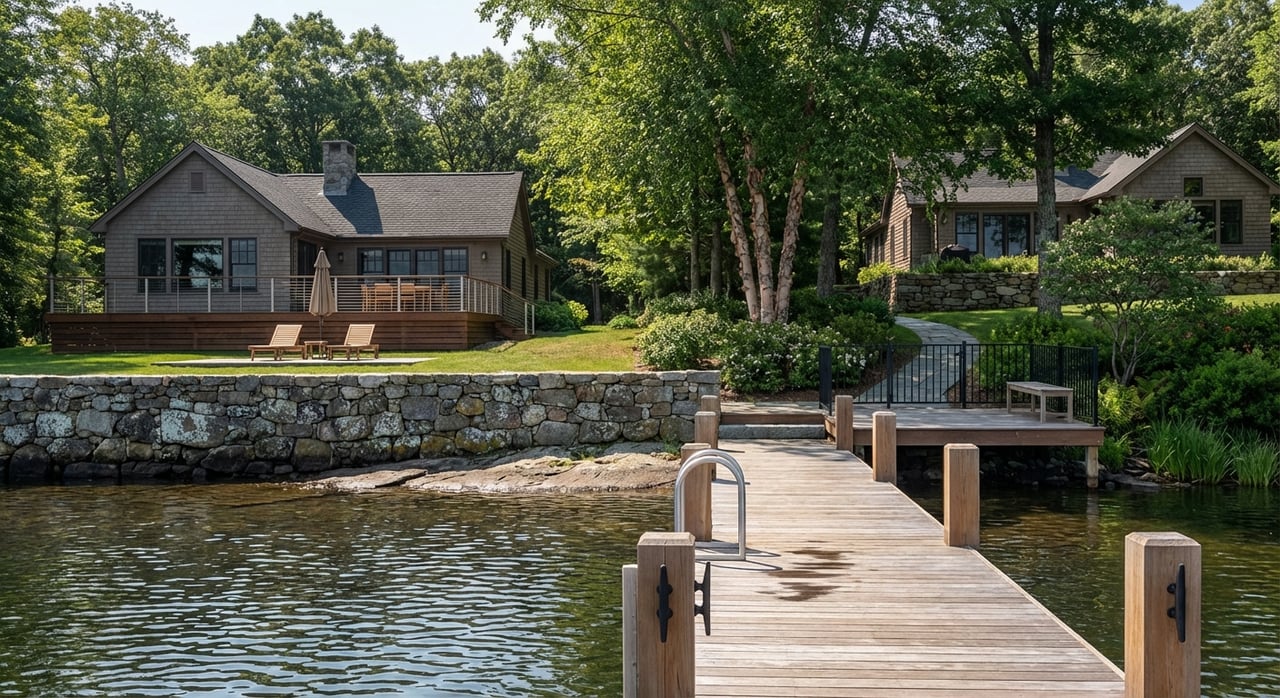
Is your ideal Candlewood Lake lifestyle a private dock steps from your deck, or a lower‑maintenance home with shared beach and mooring? If you are weighing options in 06776 and the north shore, it helps to know how rights, rules and day‑to‑day use actually differ. With a few key documents and local checks, you can avoid surprises and buy with confidence. This guide breaks down the choices, tradeoffs and due‑diligence steps that shape value on Candlewood Lake. Let’s dive in.
Candlewood Lake at a glance
Candlewood Lake spans more than 5,400 acres with about 65 miles of shoreline and roughly 1,600 waterfront residences, and it is managed by the Candlewood Lake Authority with shoreline oversight by FirstLight Power under a FERC plan. See the CLA’s overview for context and maps in the Fast Facts and map.
Boating is robust but regulated for safety and lake health. CLA notes a daytime speed limit of 45 mph, 25 mph at night, and slow/no‑wake zones near shore. Personal watercraft must stay 200 feet from shore, and most boats are limited to under 26 feet unless exempt. Review CLA’s summary of what boaters need to know when you plan boat size and storage.
Three ways to live on Candlewood
1) True waterfront homes
A true waterfront parcel abuts the shoreline and offers immediate access from your lot. These homes are the only ones that may support a private dock directly in front of the property, subject to permits and the Shoreline Management Plan. Before you tour, verify any existing dock’s license, transferability and compliance through the CLA and FirstLight’s process outlined for shoreline homeowners.
2) Deeded lake access
Some off‑water homes include deeded rights to a specific beach, slip, or launch area recorded in the land records. The exact recorded language controls if the right is exclusive, transferable at sale, and whether mooring or docking is allowed. Always confirm the instrument that creates the right through the Town of New Milford’s land records portal.
3) Association or community access
Many neighborhoods offer shared amenities such as a private beach, ramp, limited slips or moorings, and dedicated parking. Access is governed by association documents, guest policies and fees. As an example of common rules, browse the community guidance posted by Candlewood Shores.
What rules shape your access
- Ownership vs. abutter status. FirstLight owns the lake and a shoreline buffer. Even if you own a waterfront parcel, placing or modifying docks and other structures requires licensing under the Shoreline Management Plan. Start with the CLA’s guidance for shoreline homeowners.
- Dock, mooring and swim‑platform permits. Private docks and moorings need authorization through FirstLight and, in some cases, CT DEEP. Before making an offer, confirm whether existing structures are permitted and transferable.
- Boater education and safety. Connecticut requires Safe Boating and PWC certificates for many operators. Review current requirements on the CT DEEP boating certification FAQs.
- Seasonal drawdowns and updates. FirstLight schedules drawdowns that can affect dock usability in winter and early spring. You can track notices and Shoreline Management Plan updates through FirstLight public notices.
- Wetlands and shoreline work. Many properties fall within a 200‑foot regulated inland‑wetlands zone where local approvals may be needed in addition to FirstLight or DEEP permits. Check the CLA’s shoreline homeowners page for permitting context.
- Flood and insurance. Flood‑zone status and elevation relative to base flood elevation can affect lending and premiums. Use the FEMA Flood Map Service Center to understand your risk and documentation.
Lifestyle tradeoffs by option
True waterfront
- Pros: Immediate access, the strongest views, and the most convenient setup for a private dock or mooring when permitted. Waterfront commonly commands a material premium on resale due to scarcity and lifestyle appeal.
- Consider: Higher purchase price and maintenance, possible flood and shoreline structure costs, and more weekend activity near the water. Drawdowns and management actions may affect your dock season.
Deeded access
- Pros: Strong utility at a lower purchase price than front‑row shoreline, often with a defined beach, ramp, or slip. You enjoy lake life without the same shoreline maintenance.
- Consider: Rights are only as strong as the recorded language. Parking, guest policies and transferability can limit value. Always confirm how many users share the area and where you can park.
Association access
- Pros: Predictable fees and shared upkeep for beach, ramp and common areas. Community access can make boating and swimming easy without the capital cost of waterfront.
- Consider: Waitlists or lotteries for moorings and slips, seasonal passes and keys, guest limits and parking rules. Expect to follow CC&Rs and community policies.
For detailed boating rules and crowding considerations, review CLA’s what boaters need to know before you decide how often and when you will be on the water.
Long‑term value drivers
- Scarcity and rights. Shoreline scarcity and the quality of dock or slip rights drive value over time. Globally, waterfront homes often show notable premiums, but the premium on Candlewood varies by neighborhood, dock rights and lot specifics. A recent Knight Frank analysis confirms broad waterfront premiums while underscoring the need for local comps.
- Water quality and stewardship. Invasive plants and mussels can affect swimming and boating. The lake is actively monitored, with inspections and seasonal mitigation. Explore the CLA’s invasive species resources to understand current efforts.
- Operational realities. Drawdowns, boat‑length limits and enforcement shape how you use the lake from your property or association. Plan your boat choice and dock expectations around CLA’s what boaters need to know and FirstLight notices.
Your pre‑tour due‑diligence checklist
Use this quick list before you write an offer or fall in love on a showing. Print it and bring it along.
Confirm property category. Is it true waterfront, deeded access, or association access? Check the parcel map and the recorded deed through the New Milford land records.
Pull the deed and easements. Verify whether beach, slip, dock or mooring rights are explicitly granted, exclusive and transferable. If there is an association, request CC&Rs, budgets, meeting minutes and any special assessments. Many communities outline rules similar to Candlewood Shores.
Verify dock and mooring status. Ask the seller for documentation, then confirm history and compliance through the CLA and FirstLight process on the shoreline homeowners page.
Inspect shoreline structures. Have a marine or shoreline contractor evaluate docks, seawalls and stabilization work for safety and expected repairs.
Check flood risk and insurance. Get a determination and a quote early. Start with the FEMA Flood Map Service Center.
Understand septic or sewer. Confirm whether the property is on public sewer or has an on‑site system. Ask the town health department for any records and service history.
Verify association fees and rules. Confirm current dues, reserve health, guest policies, parking and any slip or mooring waitlist process.
Align boat expectations. Candlewood generally limits boats to under 26 feet, with separate rules for PWCs. Read CLA’s what boaters need to know and confirm any exemptions.
Check water‑quality context. Ask for recent CLA water‑quality updates and any seasonal treatment plans that could affect your cove. The CLA’s invasive species resources are a good primer.
Engage legal review. Have a Connecticut real‑estate attorney review title, deed language, recorded easements and any pending shoreline or FERC issues before closing.
Which option fits your goals?
- You want a private boating lifestyle with seamless access. Prioritize true waterfront with a permitted dock, and confirm drawdown performance and boat size rules early.
- You plan to swim, paddle and launch occasionally with lower carrying costs. Look for deeded access that includes defined parking and a slip or ramp, confirmed in the deed.
- You want community amenities, predictable fees and shared upkeep. Focus on association neighborhoods, understand mooring allocation, and budget for passes and seasonal keys.
When you are ready to explore inventory in 06776 and across the north shore, connect with a lake‑savvy advisor who can verify documents, coordinate shoreline inspections and steer you toward long‑term value. If you want a senior‑led, boutique approach grounded in stewardship and results, reach out to The Will Stuart Team. Schedule a personalized consultation.
FAQs
What is the difference between Candlewood Lake waterfront and deeded access in 06776?
- Waterfront abuts the lake with potential for a private dock if permitted, while deeded access grants rights to use a specific beach, slip or ramp recorded in land records, often without shoreline ownership.
Can you build or expand a private dock on Candlewood Lake?
- Only with proper authorization. Docks are licensed through FirstLight under the Shoreline Management Plan and may require additional approvals. Confirm status before you offer.
Are there boat size limits on Candlewood Lake and who enforces them?
- Most boats are limited to under 26 feet, and speed and no‑wake rules apply. The Candlewood Lake Authority and CT DEEP handle education and enforcement.
How do winter drawdowns affect private docks and boating plans?
- Winter and early‑spring drawdowns can lower water levels, limiting dock use. Confirm how a dock performs at typical seasonal levels and plan boat storage accordingly.
Do I need a boating certificate to operate a boat or PWC on Candlewood?
- In many cases yes. Connecticut Safe Boating and PWC certificates are required for specific vessels and operators. Verify the latest DEEP guidance before the season.
How do HOA waitlists and guest policies work for association access?
- Associations often allocate slips or moorings by waitlist or lottery, require seasonal passes and parking tags, and set guest limits. Review CC&Rs, budgets and recent meeting minutes before you buy.