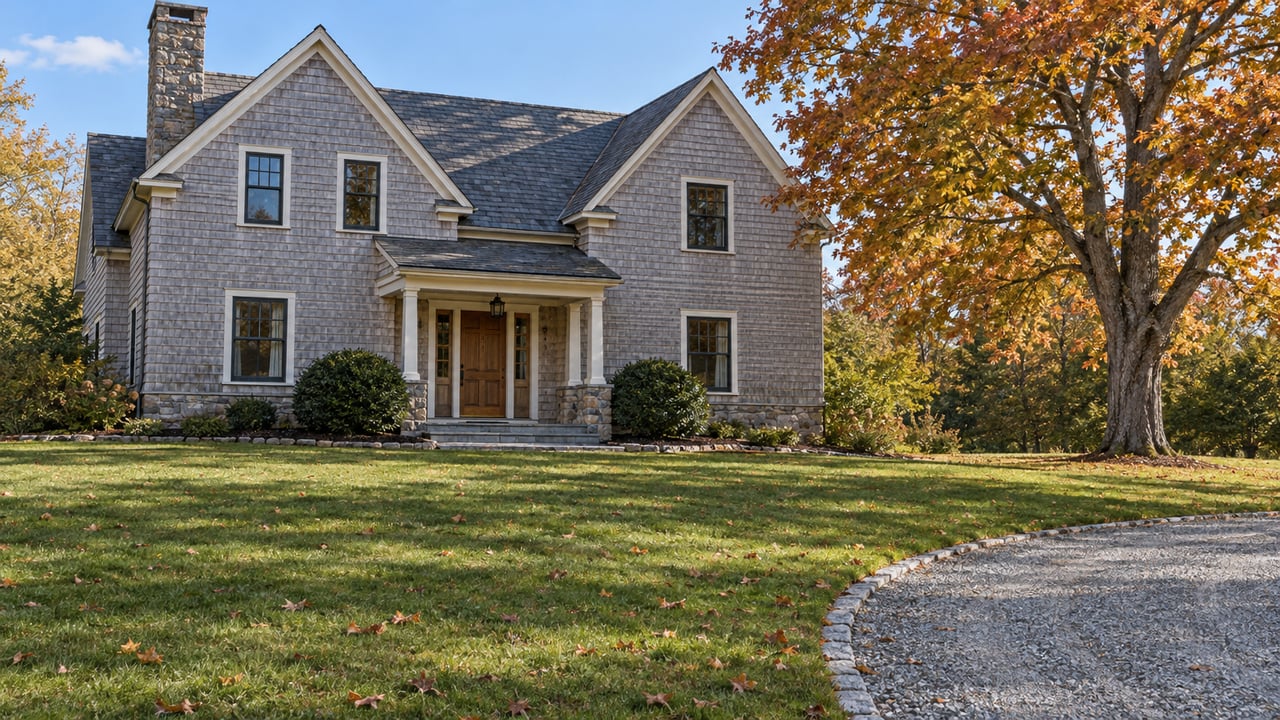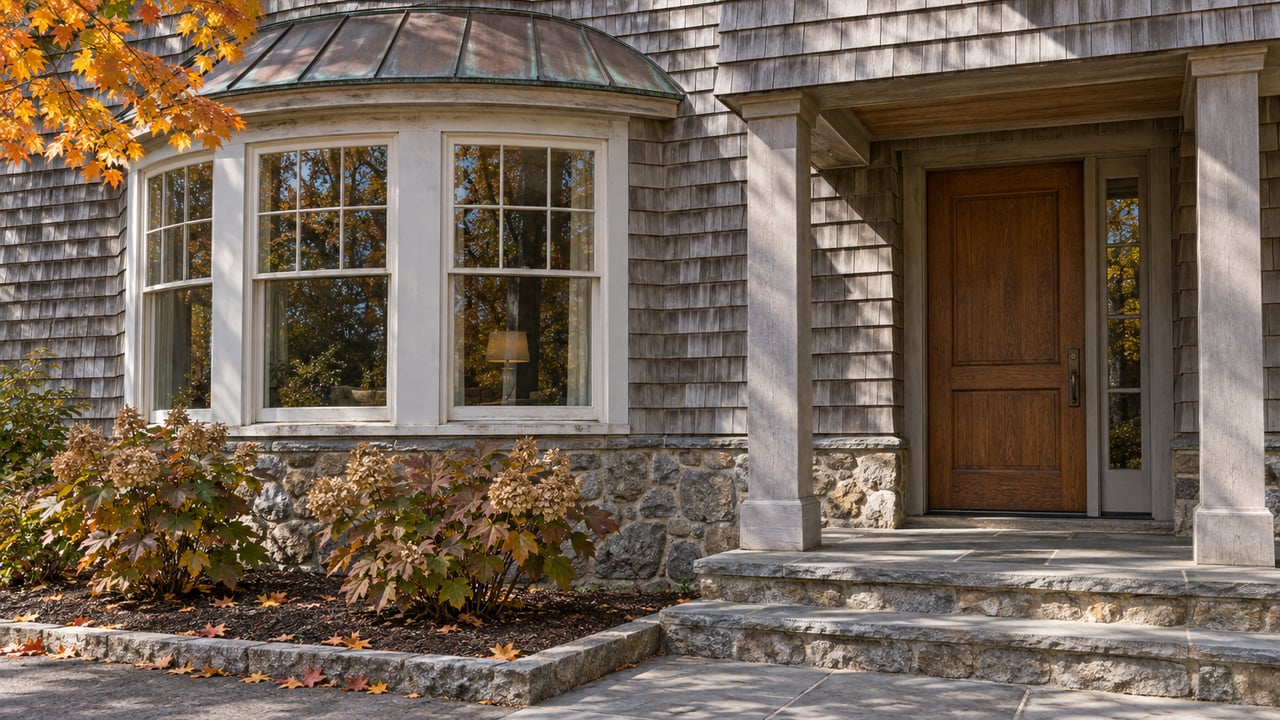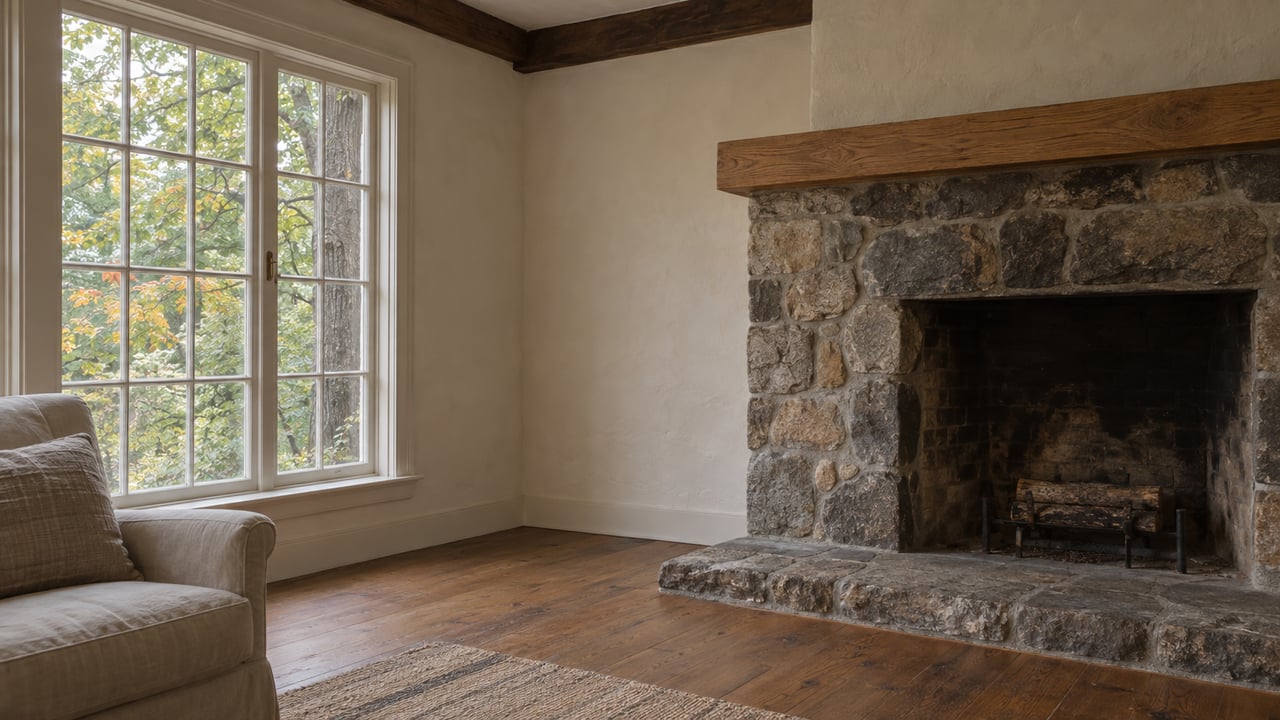
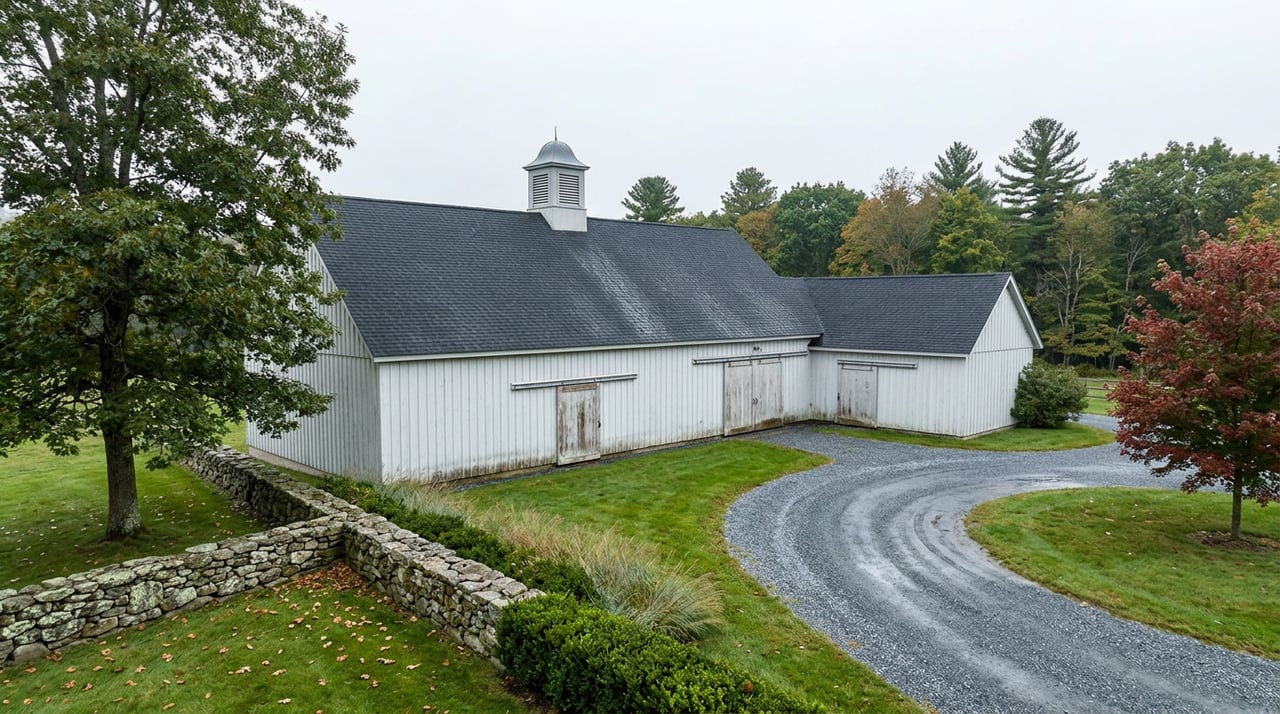
A buyer touring a stone-wall property in Bedford Hills this spring stopped near the barn to look at a small green marker nailed to a fence post. She assumed it meant the trail running along the back of the property came with the house. Her agent had to explain otherwise. The marker belongs to the Bedford Riding Lanes Association, a private club with its own dues and membership rolls, and riding those trails requires joining the association, not simply owning land that happens to touch them.
That mix-up is common, and it points to a bigger problem with how people talk about Bedford. The town gets described as one market with one median price and one trail network running through horse country. It is neither. Bedford Village, Bedford Hills, and Katonah share a township and a mailing address, but they trade at different speeds, and the century-old trail system that defines this part of Westchester does not run through all three the same way.
A Trail Network You Join, Not One You Inherit
The Bedford Riding Lanes Association was founded in 1920 and now maintains more than 100 linear miles of trail connecting Bedford, Bedford Hills, Bedford Corners, Mount Kisco, Katonah, and Pound Ridge. It is one of the largest remaining networks of private riding trails in the region, and it crosses land owned by hundreds of individual families who allow it to pass through under long-standing informal arrangements. Green signs mark where a public road ends and private trail begins, open only to current members.
None of that transfers automatically with a deed. A listing that promises "access to riding trails" usually means the property sits near the mapped route, not that ownership includes a right to ride it. Membership is personal to the rider and has to be renewed and verified directly with the association, and whether a specific parcel is even mapped into the system varies lot by lot. Anyone weighing a Bedford horse property should confirm trail status with the association itself before treating it as a given feature of the land, the same way you would confirm a well's yield before assuming it can support a barn.
One Median, Three Very Different Markets
Zoom out to price and the same lesson repeats. Bedford Hills, tracked as its own submarket, posted a median sale price of $1,000,000 as of July 2025, up 19.7 percent year over year, with price per square foot rising 24.4 percent and homes selling in an average of 19 days. That is a market moving briskly and getting more expensive on a per-foot basis, which is the clean story most people expect from Bedford's reputation.
The townwide number tells a stranger story. Bedford as a whole showed a median sale price of $1.9 million as of November 2025, up 148.4 percent year over year, yet the price per square foot for that same period fell 41.4 percent. A price that rises sharply while price per square foot drops is not evidence of a market getting hotter. It is evidence that the mix of homes selling changed, with larger and more land-heavy estates closing in that window and pulling the median up without making any single type of home more expensive to buy. By July 2026, the more recent read put Bedford's median list price at $1.59 million with a median of 41 days on market, unchanged from a year earlier, a calmer figure that sits well below the townwide spike eight months earlier.
Three numbers, one town, three different stories, all inside the same twelve-month stretch. A buyer anchoring on the townwide spike risks assuming Bedford has repriced upward across the board, when the real driver was a handful of large closings. A seller in Bedford Hills using that same townwide figure risks underpricing a home in a submarket that has been appreciating on its own, more consistent path.
What the Record Sale Actually Tells You
The clearest illustration of Bedford's top end is Sunnyfield Farm, a 214-acre equestrian estate that sold in 2024 for $30.675 million, the highest sale ever recorded in the town's history according to Wall Street Journal reporting on the deal. The land had been in the Nielsen family since the 1970s after originally being founded as a multi-discipline equestrian center by A&P heiress Joan McIntosh, and the buyer, a family who breeds and races horses, intended to keep it operating as a private farm rather than divide it for development.
That sale barely touches the townwide median because it sits so far outside typical transaction size that a single closing of that scale would distort any small-town average for years. What it actually shows is where genuine ceiling value in Bedford comes from: contiguous acreage large enough to support serious equestrian infrastructure, kept intact rather than broken into smaller parcels. It is also a reminder that some of the most consequential decisions in Bedford real estate are about what does not happen to a property, since the sale eased local concern that the farm could have been subdivided into several home sites.
How to Check What You're Actually Buying Before You Write an Offer
- Ask which side of a hamlet line the property sits on. Bedford Hills, Bedford Village, and Katonah post separate price trends even though all three carry a Bedford address.
- Contact the Bedford Riding Lanes Association directly to confirm the parcel is mapped into their trail system rather than assuming a nearby marker means access.
- Ask whether the seller's BRLA membership, if any, is active, since membership belongs to the rider and is not recorded with the deed or disclosed automatically at closing.
- Pull the last twelve months of closings on the specific street rather than relying on the townwide average to set or evaluate an offer price.
Frequently Asked Questions
Does every property near a BRLA trail qualify for membership? Being adjacent to a mapped trail does not guarantee inclusion. The network connects Bedford, Bedford Hills, Bedford Corners, Mount Kisco, Katonah, and Pound Ridge, but mapping is specific to each parcel, so status should be confirmed directly with the association rather than assumed from a listing description.
Do neighboring towns run on the same trail system? Yes. The BRLA network already extends into Katonah and Pound Ridge, so a buyer comparing those markets to Bedford is often looking at pieces of the same trail infrastructure rather than separate systems entirely.
Is land next to a trail automatically worth more? Not automatically. The stronger pattern in Bedford's recent sales is a link between contiguous acreage and price, and between which hamlet a home sits in and its price trend, rather than simple proximity to a trail marker.
Bedford rewards buyers who ask what a specific address actually includes rather than trusting what the town's reputation implies. Will Stuart grew up around working farms and has spent his career translating exactly this kind of local detail into a clear plan for clients weighing equestrian and estate property across Westchester and Litchfield County. If you are comparing a Bedford property against others in the region and want the trail access, the hamlet-level trend, and the comparable sales laid out plainly before you write an offer, The Will Stuart Team is ready to schedule a personalized consultation.
This article is general information, not legal, tax or financial advice. Consult a qualified professional about your situation.