Choosing where to buy in Ridgefield often comes down to one simple question: do you want to be closer to Main Street or farther out on the country roads? Both settings offer a distinct version of Ridgefield living, and neither is universally better. The right fit depends on how you want to spend your days, how much land you need, and how much flexibility you want with the property itself. If you are weighing in-town convenience against country privacy, this guide will help you sort through the trade-offs. Let’s dive in.
Ridgefield Has Two Distinct Buying Lanes
Ridgefield’s downtown core is centered on Main Street and includes Bailey Avenue plus parts of Catoonah Street and Prospect Street. The town describes Main Street as a mile-plus ridge lined with homes, museums, churches, and shops, which helps explain why in-town living feels connected and pedestrian-oriented.
Outside the center, the pattern shifts quickly. Ridgefield is largely a low-density town, and much of its residential land is zoned for larger lots. That means country living here is not just a feeling. It is built into how the town is organized.
In-Town Ridgefield: What It Feels Like
If you want daily convenience, in-town Ridgefield is usually the easier choice. Downtown zoning supports a high-pedestrian environment, with retail, personal service, banking, office, and sit-down restaurant uses allowed in the central business area.
In practical terms, that can mean simpler errands, easier dining plans, and more opportunities to enjoy the center without getting in the car every time. For many buyers, that access is the biggest draw.
Walkability Is the Main Advantage
Main Street living tends to appeal to buyers who want to be near shops, restaurants, and cultural venues. Ridgefield’s regulations even recognize this walkable pattern by allowing reduced parking requirements for certain new or expanded downtown development because trips are more likely to be multi-purpose and walkable.
If your ideal day includes coffee, browsing downtown, or heading to an event without a long drive, in-town living lines up well with that routine. It offers a more connected pace.
Housing Near the Center Is Denser
The Main Street Design District applies to certain Main Street properties between Prospect Street and Pound Street that are currently zoned RA or SDR-20. Its purpose is to support higher-density residential housing close to the commercial center while preserving historic character.
That does not mean every in-town property is small, but it does mean homes near the center are more likely to sit on comparatively smaller lots than properties on Ridgefield’s outer roads. If land is your top priority, this is an important difference.
Historic Character Comes With Oversight
One of downtown Ridgefield’s strengths is its visual character. The Village District rules are designed to protect distinctive landscape features and historic structures visible from the road.
That also means exterior changes may receive review for details like materials, color, height, signage, and landscaping. If you are buying in or near the historic core, this is one of the most important ownership considerations to understand before you close.
Country Ridgefield: What It Feels Like
If your priority is space, privacy, and a stronger connection to the land, country Ridgefield will likely feel more natural. The town’s residential zoning is structured around lower-density development, with many areas set up for minimum lot sizes of at least 2 acres.
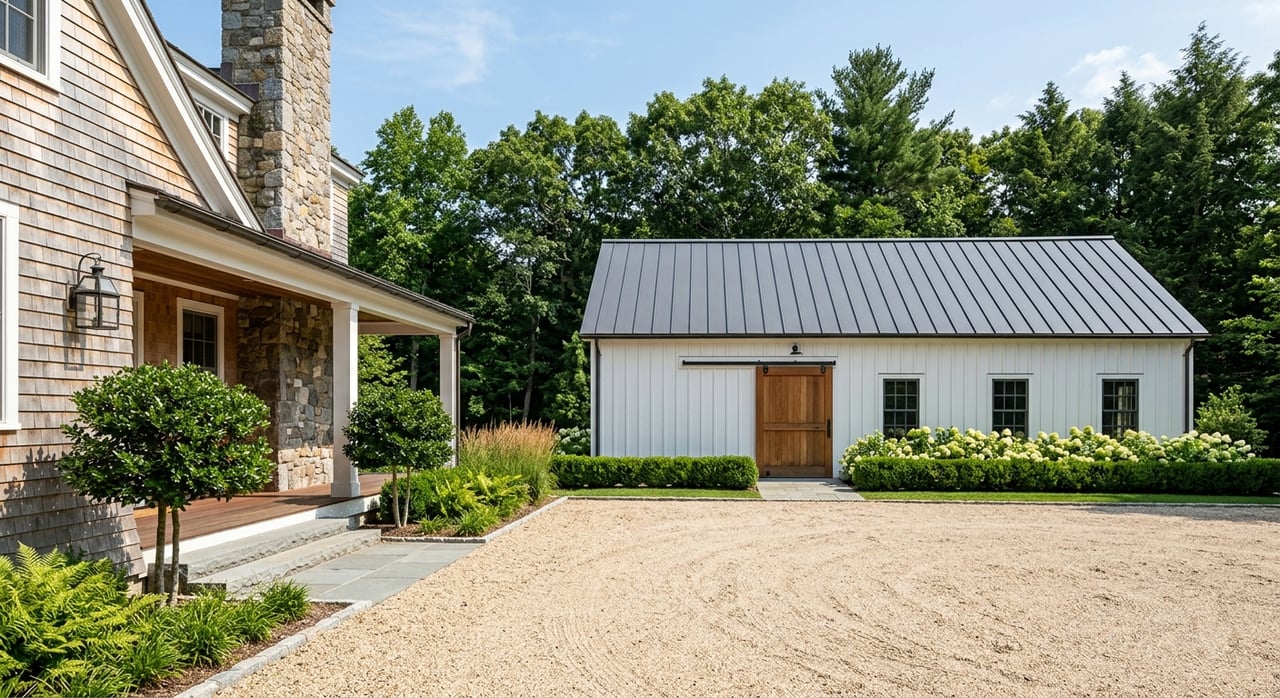
That creates a very different ownership experience. Homes are often separated by more land, with more room for driveways, landscaping, outdoor amenities, and a quieter sense of scale.
Larger Lots Shape the Experience
Ridgefield’s residential districts include 3-acre, 2-acre, and 1-acre zones, along with some smaller-lot districts. Minimum frontage also increases as lots get larger, with 200 feet required in the 3-acre and 2-acre zones.
For you as a buyer, that usually translates into more breathing room. It can also support property uses that benefit from acreage, such as expanded gardens, outdoor recreation space, or more complex estate layouts.
Privacy Often Comes With More Driving
Country living offers more open-space character, but it usually comes with a stronger reliance on the car. Ridgefield as a whole remains driving-first in many ways, and mass-transit options are mostly limited to the Route 7 corridor.
That does not make country properties harder to own. It just means your daily routine may involve more planning for errands, dining, commuting, and activities.
Country Homes May Offer More Project Freedom
One of the biggest practical differences between in-town and country Ridgefield is what happens when you want to make exterior changes. In-town properties in historic or village contexts may face more review.
By contrast, country properties are often attractive to buyers who want fewer design constraints and more flexibility in how they manage the land and structures. If you are thinking about future additions, landscaping, or specialized property improvements, that extra freedom can matter.
The Three Factors That Usually Decide It
Most Ridgefield buyers can narrow this choice by focusing on three questions: access, land, and project freedom. Once you are clear on those, the right setting often becomes obvious.
1. Access: Walkability or Car Dependence?
If you want easier access to errands, dining, and events, in-town Ridgefield has the advantage. The downtown area is set up for pedestrian activity and mixed daily use.
If you do not mind driving for most day-to-day needs, country Ridgefield may be a better trade for the privacy and space you gain.
2. Land: Smaller Lots or Acreage?
In-town homes typically offer proximity and character, but often on smaller lots. Country properties are more likely to align with Ridgefield’s larger-lot zoning pattern, including 1-acre, 2-acre, and 3-acre settings.
If you want room to spread out, entertain outdoors, or manage a more substantial landscape, country properties usually give you more options.
3. Project Freedom: Review or Flexibility?
This is the hidden factor many buyers overlook. In or near Ridgefield’s historic areas, exterior work may be subject to review before permits are issued.
If preserving a property’s historic setting appeals to you, that may feel like part of the value. If you want broader freedom to alter exterior elements, country locations may be more comfortable.
What About Commuting?
Commuting is not a simple in-town versus country answer. Ridgefield’s overall mean commute time is 33.0 minutes, which gives you a general townwide baseline, but your actual experience will depend on where you work and how you travel.
For rail access, the town’s housing plan points to the Branchville station on the Danbury Branch, the Ridgefield-Katonah shuttle, and other transit services focused around the Route 7 corridor. HARTransit also lists weekday shuttle service to Katonah Station, with Ridgefield stops including Jessie Lee Memorial Church Park & Ride and Prospect Ridge Park & Ride.
If commuting is central to your search, it is worth looking beyond the house itself. You should think about your likely drive to a park-and-ride, shuttle stop, or station as part of the decision.
Which Buyers Often Prefer In-Town?
In-town Ridgefield tends to work well for buyers who value convenience and character first. You may prefer this setting if you want to:
- Walk or make shorter trips to shops, dining, and events
- Live near Ridgefield’s central streetscape and civic core
- Spend less time maintaining a large parcel of land
- Embrace the look and feel of a more historic setting
For some buyers, especially those who want an easier lock-and-leave lifestyle or a more connected daily rhythm, that combination is hard to beat.
Which Buyers Often Prefer Country?
Country Ridgefield tends to fit buyers who prioritize privacy, land, and flexibility. You may lean this direction if you want to:
- Own a larger lot with more separation from neighbors
- Create outdoor living areas with more room to expand
- Have a property that supports acreage-focused use and stewardship
- Avoid the trade-offs that can come with a more regulated historic context
This option often appeals to buyers who see the land itself as part of the value, not just the house.
A Local Way to Make the Decision
If you are still unsure, picture a normal Wednesday, not a holiday weekend. Think about where you buy coffee, how often you go out, whether you want to maintain more land, and how much you care about being able to change exterior details later.
That exercise usually reveals the answer faster than a pros-and-cons list. Ridgefield offers both a village-centered lifestyle and a country-road lifestyle, but they serve different habits well.
With a 2024 median owner-occupied value of $836,200 and an owner-occupied housing rate of 83.5%, Ridgefield remains a place where many buyers are thinking long term. The best purchase is often the one that fits how you plan to live, maintain, and enjoy the property over time.
If you want help weighing in-town convenience against country privacy, The Will Stuart Team offers personalized guidance grounded in Ridgefield market knowledge, property stewardship, and a clear view of how each location choice can support your lifestyle.
FAQs
Is in-town Ridgefield more walkable than country Ridgefield?
- Yes. Ridgefield’s downtown area is the more walkable setting for errands, dining, and events, while country areas are generally more car-dependent.
Do country homes in Ridgefield usually have larger lots?
- Yes. Much of Ridgefield’s residential land is zoned for lower-density development, with 1-acre, 2-acre, and 3-acre districts that typically offer more land and frontage.
Do Ridgefield in-town homes face historic review for exterior changes?
- In some cases, yes. Exterior work in village or historic contexts may be subject to review for features such as materials, color, height, and landscaping before permits are issued.
Is commuting easier from in-town Ridgefield?
- It depends on your destination and route. Ridgefield remains largely driving-first, and rail access often involves Branchville or Katonah connections through shuttle or park-and-ride patterns.
What matters most when choosing between in-town and country Ridgefield?
- The clearest decision factors are access, amount of land, and how much flexibility you want for future exterior changes or property projects.