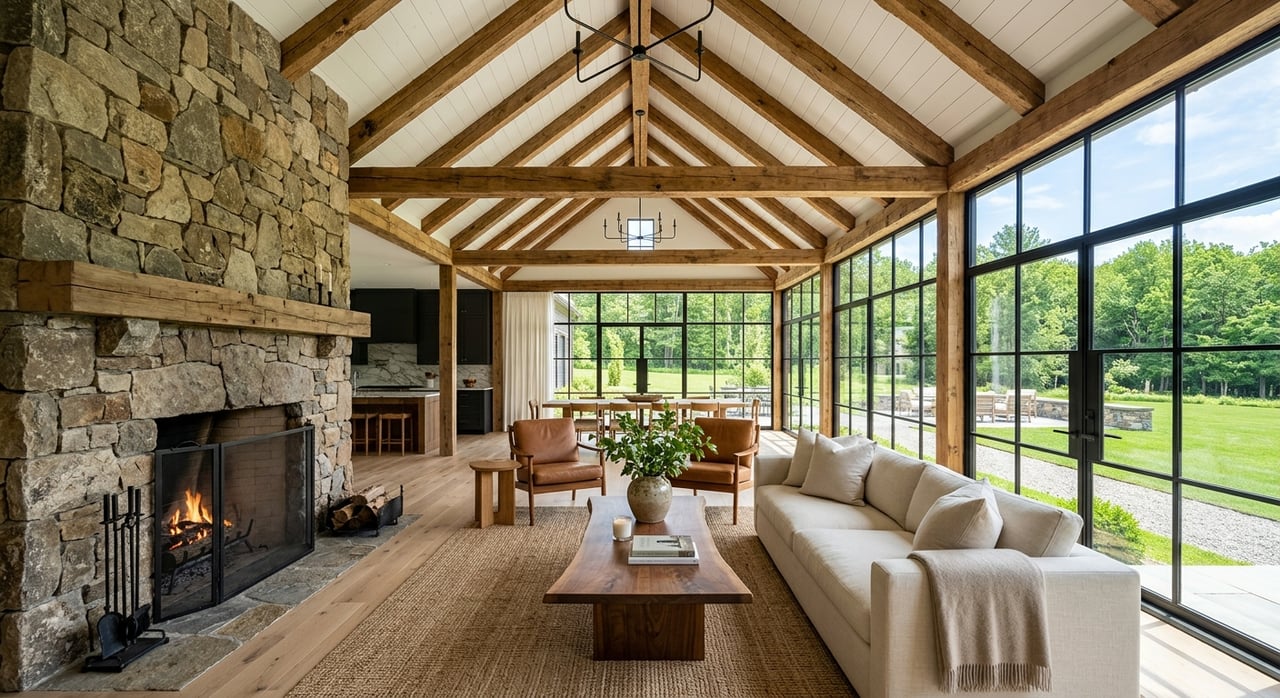
If you want a place where village sidewalks, scenic roads, and large-lot country properties can all exist within one town, Kent deserves a closer look. For many buyers, the challenge is not whether Kent is appealing. It is understanding how the town’s planning, housing patterns, and outdoor setting shape daily life. This guide will help you see how modern country living in Kent works in practice, from home styles to lifestyle rhythms. Let’s dive in.
What Modern Country Living Means in Kent
Kent, Connecticut, sits in northwest Litchfield County and blends a long rural history with a distinctly current lifestyle. The town says it was incorporated in 1739, grew from a farming and iron-ore community, and today remains primarily residential with small industry and farms. With about 3,000 residents and hamlets that include Bulls Bridge, Kent Hollow, South Kent, and The Cobble, it offers a low-density setting that still has a defined town center.
What makes Kent feel especially cohesive is that its country character is reinforced by policy, not just scenery. According to the town’s land-use plan, more than 99% of Kent is zoned residential. The same plan notes that residential development is guided by soil types, terrain, and infrastructure capacity, which helps explain why the town retains such a strong sense of open space and rural form.
Village Life Has Real Definition
Kent’s village center is not an accident. The town’s village overlay rules are designed to protect and enhance the small New England village character, encourage pedestrian activity, preserve historic and significant structures, and maintain a mix of commercial and residential uses. For you as a buyer, that means the in-town experience tends to feel intentional and visually consistent.
Daily life in the village center brings together homes, shops, galleries, restaurants, cafes, bakeries, and antiques. The town also points to local museums such as the Eric Sloane Museum, Seven Hearths Museum, and the Connecticut Antique Machinery Museum. Many downtown businesses are owner-operated, which adds to the personal scale that people often want when they move to a smaller Connecticut town.
Kent Offers Two Distinct Living Patterns
One of Kent’s biggest strengths is variety within a single town. You can find a more compact in-town setting near the village center, or you can look for a rural property with more acreage, privacy, and distance between homes. Those options feel quite different, and the zoning framework helps explain why.
The town’s 2022 Plan of Conservation and Development says Village Residential districts are located in the village center and are generally served by public water and sewer. Village lot sizes can be as small as 10,000 square feet in VR-1 and 30,000 square feet in VR-2. That can support a more connected, walkable pattern for buyers who want easier access to village amenities.
By contrast, Kent’s Rural Residential zoning is soil-based, and RU-1 lots range from 2 to 5 acres depending on soil type. The Birch Hill district requires 1 acre of buildable land. In practical terms, this creates a meaningful shift as you move away from town center streets into larger-lot country settings.
Why This Matters for Buyers
If you are searching for modern country living, Kent gives you room to match the property to your lifestyle. Some buyers want a house that feels anchored to the village, with simpler daily routines and nearby shops or dining. Others want land, long drives, wooded buffers, or the possibility of a more estate-like property experience.
That difference matters even more in a market like Kent, where place and land are a large part of value. For buyers considering acreage or more complex properties, understanding soil conditions, terrain, access, and broader land-use context can be just as important as the house itself. This is especially true in a town where development patterns are closely tied to environmental and infrastructure realities.
Outdoor Access Is Part of Everyday Life
Kent’s outdoor setting is one of its defining lifestyle advantages. Kent Falls State Park features a main drop of about 70 feet, with the full cascade descending roughly 250 feet to the Housatonic River. Macedonia Brook State Park offers more than 10 miles of trails, steep ascents, and broad views, while Bulls Bridge combines a historic covered bridge with river hiking and trail connections.
For full-time residents, this is more than a weekend visitor story. Kent’s Conservation Commission trail materials identify multiple preserves and trailheads, including the Appalachian Trail, Kent Falls, Macedonia Brook, and Bulls Bridge. The commission also states that open space is essential to Kent’s rural, scenic, and historic character, which supports the sense that outdoor access is deeply tied to how the town functions and feels.
Scenic Roads Shape the Experience
Kent’s planning documents identify scenic roads and scenic areas as community-character assets, alongside the Housatonic River and local trail systems. That matters because your drive home is part of the lifestyle in a place like this. The appeal is not limited to a single destination. It often includes wooded stretches, rolling terrain, and a gradual transition from village center to countryside.
For buyers looking at second homes, estates, or rural retreats, those transitions can be a major part of Kent’s appeal. They create a sense of separation without removing you entirely from daily conveniences in the village. That balance is one reason Kent continues to stand out among Litchfield County towns.
River Access Comes With Important Context
The Housatonic River is a major visual and recreational asset in Kent. The Connecticut Department of Energy and Environmental Protection describes it as a recreation corridor, and a section of the Appalachian National Scenic Trail runs along the river between Kent and Cornwall Bridge. This contributes to the area’s strong connection to hiking, views, and outdoor exploration.
At the same time, DEEP notes that an ongoing fish-consumption advisory remains in effect because of legacy PCB pollution. So if you are thinking about river-adjacent lifestyle benefits, it is most accurate to view the Housatonic as a scenic and recreational resource rather than unrestricted water use. That kind of nuance matters when evaluating how a setting aligns with your goals.
Housing Character Reflects Town Planning
Kent’s housing story is shaped as much by regulation as by architecture. The current zoning includes a Village Housing Overlay District intended to enable housing, including affordable housing units, within part of the village area. At the same time, village overlay and design standards are explicit about preserving the town’s small-scale character.
For you, that means Kent is trying to balance housing needs with preservation goals. It also helps explain why the town can offer both a protected village core and lower-density rural areas without blurring the difference between them. Buyers who appreciate thoughtful stewardship of place often find that balance appealing.
Market Context Buyers Should Understand
Kent’s housing plan gives useful context about supply and affordability pressures. The town reported that, as of June 2022, there were 67 dedicated affordable units, all occupied, with 107 households on waiting lists. The same plan said 366 households were spending more than 30% of income on housing and 199 were spending more than 50%.
Those figures do not define every price point in Kent, but they do show that housing availability is a real issue in town. For buyers and sellers alike, that reinforces the importance of clear local guidance and realistic expectations. In a constrained market, understanding the differences between property types and locations can make your search more focused and effective.
Schools and Daily Routines in Kent
For buyers thinking about long-term routines, Kent includes several education options within its broader community profile. Kent Center School serves PK-8, and the town is part of Region One, with Housatonic Valley Regional High School in Falls Village. The town also notes three private preparatory schools in Kent: Kent School, Marvelwood School, and South Kent School.
The most useful takeaway is that school options are part of the town’s lifestyle mix, along with outdoor access and village amenities. If schools are an important part of your move, it helps to evaluate them alongside commute patterns, property setting, and how much proximity you want to the village center.
Who Kent May Appeal To Most
Kent can be a strong fit if you want a home that feels connected to landscape and local character. You may be drawn to a village property where you can enjoy a more walkable daily rhythm, or you may prefer a rural setting with acreage, privacy, and room to shape a more country-oriented lifestyle. Either way, the town offers a level of distinction that comes from long-term planning as well as natural beauty.
For higher-value buyers, Kent can also appeal as a lifestyle market where stewardship matters. Land, terrain, scenic protection, and the relationship between house and setting all play a meaningful role here. That makes local insight especially valuable when you are comparing in-town homes, large-lot residences, or more complex estate properties.
If you are considering a move to Kent or looking for a property that aligns with a modern country lifestyle, The Will Stuart Team can help you evaluate the market with a clear, place-based perspective.
FAQs
What is modern country living in Kent, Connecticut?
- Modern country living in Kent means choosing between a protected village setting and a lower-density rural setting, with daily life shaped by scenic land, residential zoning, and strong outdoor access.
What types of homes can you find in Kent, Connecticut?
- Kent includes village-area homes on smaller lots in Village Residential districts and rural properties on larger lots, with RU-1 zoning ranging from 2 to 5 acres depending on soil type.
What is the village center like in Kent, Connecticut?
- Kent’s village center is designed to preserve a small New England village character and includes a mix of homes, shops, galleries, restaurants, cafes, bakeries, and antiques.
What outdoor amenities are available in Kent, Connecticut?
- Kent offers access to Kent Falls State Park, Macedonia Brook State Park, Bulls Bridge, the Appalachian Trail, and other preserves and trailheads identified by the town’s Conservation Commission.
What should buyers know about the Housatonic River in Kent, Connecticut?
- The Housatonic River is an important scenic and recreational feature, but DEEP notes that a fish-consumption advisory remains in effect because of legacy PCB pollution.
Are there different neighborhood patterns in Kent, Connecticut?
- Yes. Kent has a compact village-centered pattern in some areas and a more rural, large-lot pattern in others, and those differences are shaped by the town’s zoning and infrastructure framework.
What schools serve residents of Kent, Connecticut?
- Kent Center School serves PK-8, Kent is part of Region One with Housatonic Valley Regional High School in Falls Village, and the town also includes Kent School, Marvelwood School, and South Kent School.